




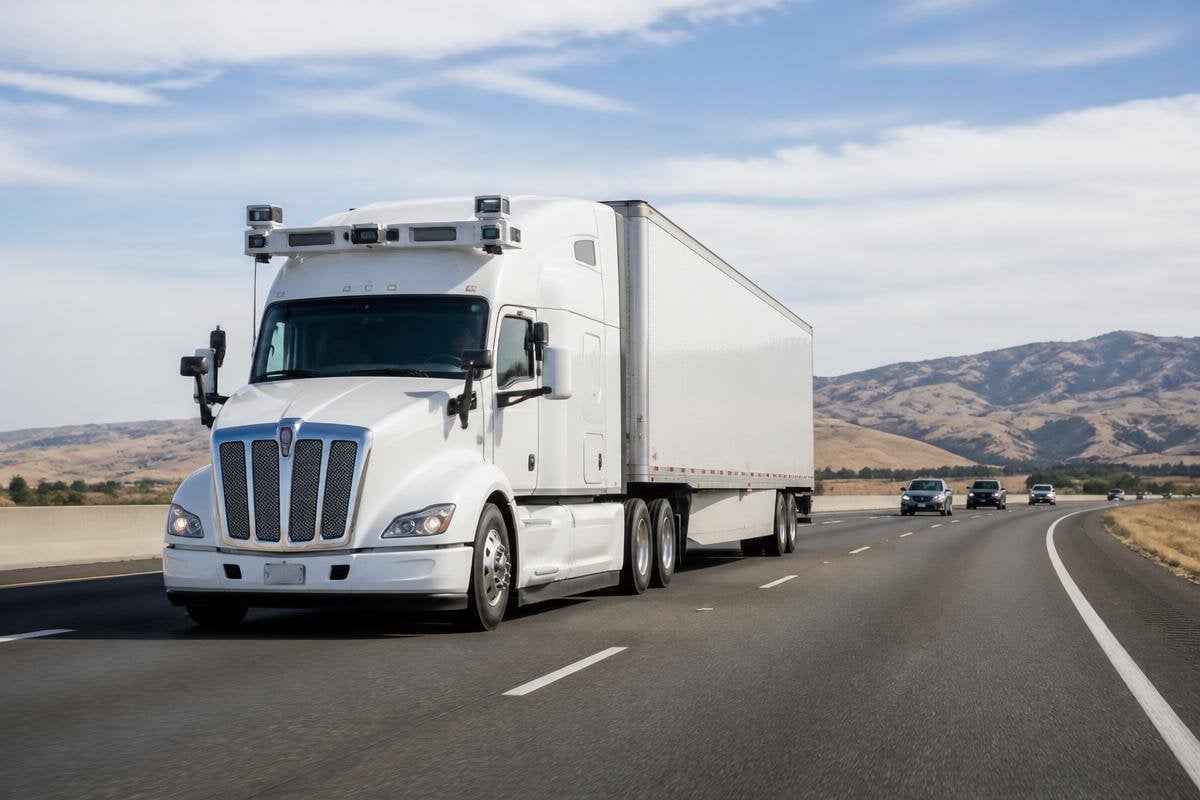
An autonomous truck can steer, brake, and follow a route without a person controlling every movement. The hard part is proving that it can do those jobs safely when roads, weather, cargo, and other drivers behave in ways its software did not expect.
Quick read
- A useful test needs a defined route, operating area, and safety process.
- Remote support does not remove the need for safe decisions inside the truck.
- Public proof should include failures, handoffs, delays, and operating limits.
What the truck has to do
The system starts with sensors that read the road and nearby objects. Software then builds a view of the truck’s position, plans a path, and sends commands to the steering, brakes, and motor controls.
That chain has to keep working when a lane marking is hard to see, a vehicle stops in an unusual place, or road work changes the normal route. A truck also needs a safe response when its sensors disagree or a part of the system stops reporting.
The useful question is not whether the truck can drive a clear road. It is how often the system asks for help, how much warning it gives, and what the truck does while waiting for a remote operator.
Where the business case gets tested
A carrier will measure more than driving skill. The truck has to fit loading sites, fuel or charging plans, maintenance work, insurance rules, and the time needed to recover from a stopped vehicle.
A route that works in one operating area may need different maps, safety rules, or support staff in another. That makes the approved operating area part of the product, not a footnote in its paperwork.
The same point applies to labor. A remote operator may support several trucks, but that depends on the number of alerts, the distance between support sites, and the time needed to make a safe choice. Without those figures, the cost case stays open.
A truck’s autonomy claim needs a named route, test date, safety setup, and remote support plan. Autonomous truck reports from Robot24.com can put those details beside a vehicle’s stated limits before the next section tests the proof behind the claim.
The proof that matters
A polished road test can show that the system works in one planned setting. It cannot, by itself, show how the truck handles the full range of conditions a carrier faces.
Useful reporting should state the route, weather, traffic mix, cargo, safety driver role, remote support setup, and number of completed trips. It should also show when the truck stopped, handed control to a person, or needed a new route.
The missing cases matter as much as the clean runs. A safety stop that takes minutes may be acceptable on a quiet route and costly at a busy depot.
A truck that reaches its destination but needs frequent human help may still leave a carrier with most of the old staffing cost.
What remains unproven
The sector still has to show how autonomous trucks behave across changing roads and long operating periods. It also has to show who takes responsibility when the system cannot classify a hazard, loses a sensor, or reaches a road outside its approved area.
Regulation will shape that answer. So will the contract between the truck maker, software supplier, carrier, and remote support team. Each party needs a clear task when the vehicle stops or causes damage.
I’d wait for public operating data before treating an autonomous truck as ready for broad fleet use. A demo proves control for a moment; a carrier needs safe trips, clear fault handling, and costs that hold across a route.
A buyer’s check before deployment
Use these questions when a vendor presents a pilot:
- Route limits: Which roads, weather conditions, and times can the truck handle?
- Human support: What starts a remote handoff, and how long can the truck wait safely?
- Failure response: What happens after a blocked sensor, lost connection, or software fault?
- Fleet cost: What staff, maintenance, insurance, and charging changes does the pilot need?
- Evidence: Are the results tied to named routes, trip counts, stops, and support events?
- Exit plan: Who can take the truck out of service, and how is the vehicle recovered?
The next useful proof is a long operating record with the limits left visible. Until carriers can compare safe completed trips with human support time and total cost, autonomous trucking remains a test of process as much as a test of driving.